SHIPPING IN LEBANON & CASH ON DELIVERY 🇱🇧
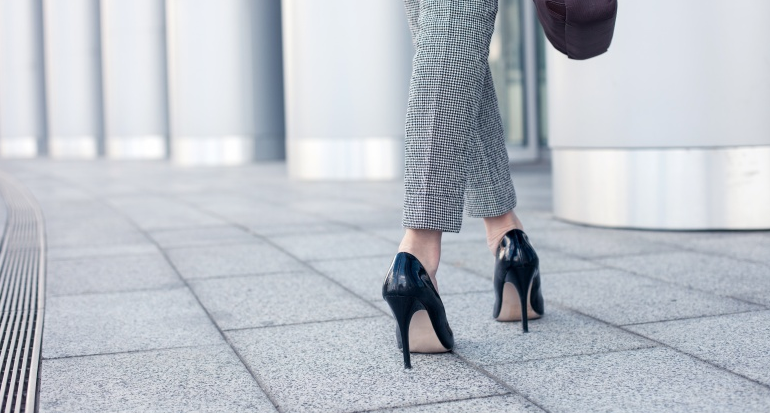
High heels—can’t live with ’em, can’t live without ’em. They’re essential to (most) wardrobes, but there’s nothing worse than putting together an amazing outfit for a night out, only to be sidelined an hour in because your feet are throbbing in pain.
It’s the age-old question asked by every shoe-loving woman at one point or another: How to wear high heels without pain. Is it even possible? Are we relegated to a “grin and bear” mentality for life in the name of looking—and feeling—awesome? Turns out, a fabulous pair sky-high shoes and pain-free feet aren’t mutually exclusive.
We spoke to podiatry expert Dr. Catherine Moyer, who gave us eight tips for how to continue to wear stylish shoes—without paying the painful price.
1. Make sure you’re wearing the right size shoe
The number one mistake women make would probably be not having the right shoe size for their foot. Your foot size changes over the years, even as much as one full size, especially after having kids. Have your feet sized once a year, and do it if you’ve never had it done. Have your feet measured when you’re buying shoes, for width and for length as well. A lot of people think they’re a wide or vise versa and they’re not, so definitely do that before you shop.
2. Educate yourself on your own foot type
Know your foot type. In my opinion, a podiatrist would be the best way to know your foot type and what’s going on. If you can’t run out to the podiatrist, there’s a couple of neat ways to see if you have a flat foot or a high-arch foot. Wet your foot and step onto a piece of construction paper. When you make an impression, it will show you how much your foot is flattening or how high of an arch you have. You can look at a person’s foot type and see why they are having pain.

Photo: Getty Images
3. The thicker the heel, the better
Avoid thin heels, the stilettos. They cause your foot to wobble around. Sometimes, the dress is just going to call for a stiletto, as long as it’s something that’s occasional. If you’re wearing stilettos everyday, you might want to consider a chunkier heel style and change it up a bit.
4. Avoid thin soles, opt instead for a platform
Thin soles will almost always give you pain on the bottom of your foot. You want a thicker sole or a little bit of a platform, which will offset some of the pressure when you’re walking. A rubbery material will absorb that pressure.
5. Take breaks
Kick your shoes off throughout the day and stretch your ankles and toes.
6. Stretch your feet after you take your shoes off
The stretches that you’ll want to do are the stretches that will target the front of the foot and ankle, like pointing your toes down, and pulling your toes up with a strap to get the Achilles’ tendon and the calf muscles. And then side to side to get to the instep and the outside of the foot.

Photo: Getty Images
7. Try a shoe with more coverage up top
The more coverage you have on the top of your foot, the better. Sometimes high-heeled boots are actually something you can wear all day and they don’t bother your feet as much. In the summer, you can try something with an ankle strap or a big wide strap across the top. If you’re prone to blisters and friction, you might want to try that style, something that covers more of the top of your foot.
8. Those over-the-counter shoe inserts really do help
One thing to try are the over-the-counter products that market themselves for high heels. They are called metatarsal or ball of the foot pads. They are oval-shaped pads that go under the ball of the foot, usually made from a silicone gel. They combat soreness under the ball of the foot. Especially if it’s made of silicone, it will hold your foot more steady in the shoe so your feet aren’t sliding forward as much, which will protect your toes from friction and blisters.

Photo: Getty Images
Originally published March 2016. Updated April 2017.